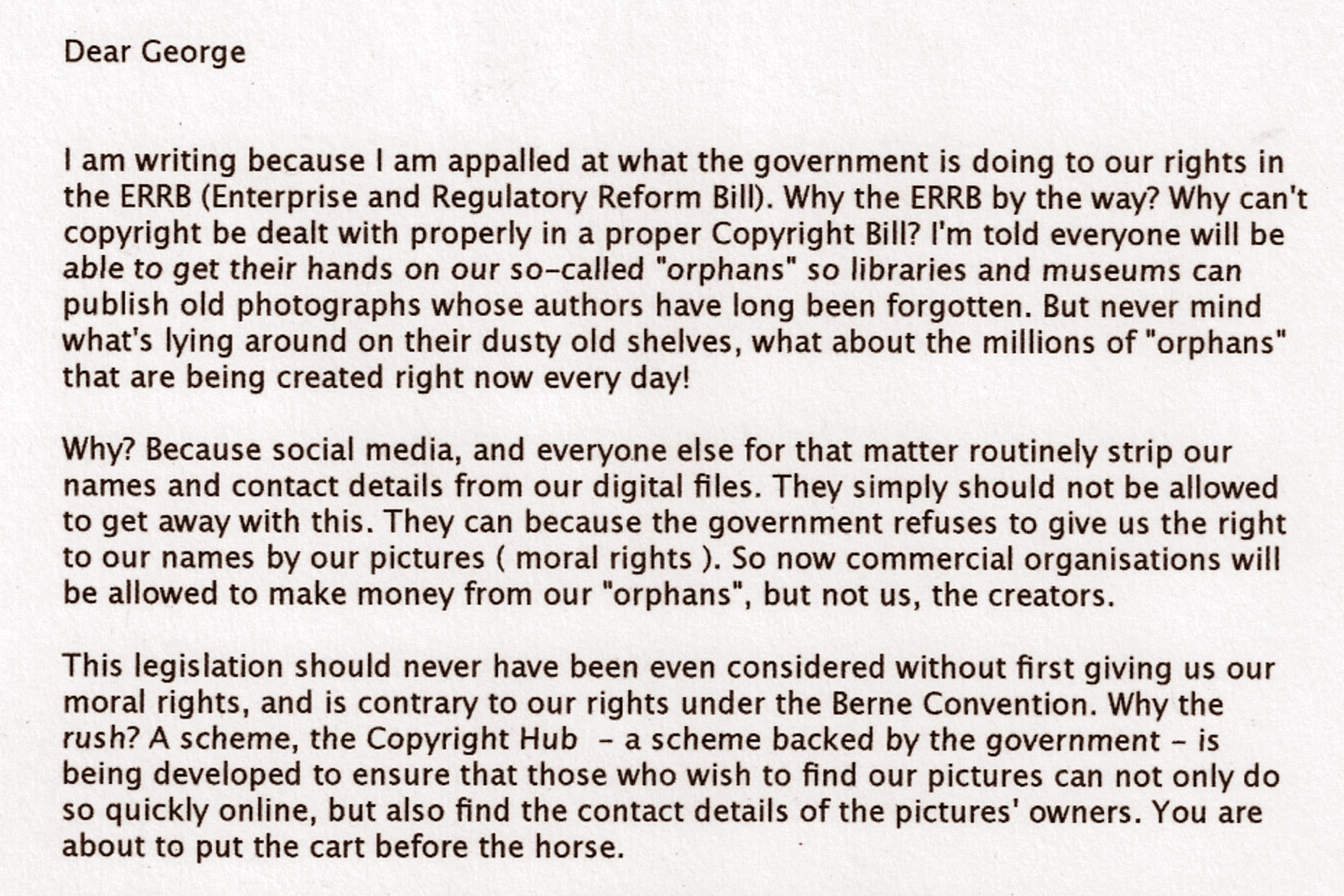
An open letter to Time Inc UK
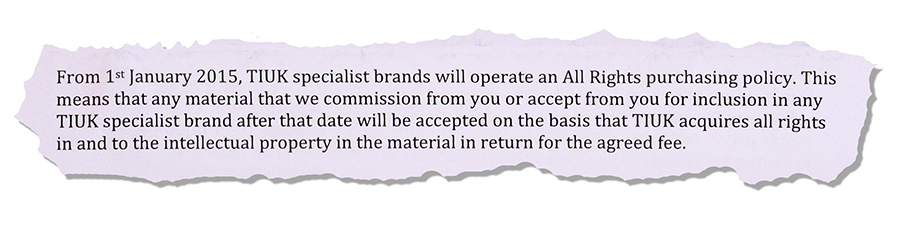
When several photographers started getting letters from Hamish Dawson, Publishing Director of Time Inc.(UK) Ltd, Specialist Sport and Leisure with a new rights grab which asked them to agree to sign away all rights in any work that they carried out for the magazines and websites in the group we decided to write to him. Below is that letter and below that is his reply.
We are pretty sure that few people will bother to go down and read what he said in reply but it is worth noting that in the final paragraph he says:
“If an individual contributor does not wish to enter into an All Rights agreement, it may be possible for that individual to negotiate a different arrangement, for example, a Qualified Rights agreement. Each case continues to be considered on its own merits, and that decision remains with the senior team on the brand concerned.”
This is a long way from being the response that we would be looking for but it is a course of action that is open to individual photographers to follow if they are offered work by one of the Time Inc UK titles and they don’t want to sign the new contract.
Dear Mr Dawson
What would make a photographer with well over twenty years experience, a mortgage and a family tell one of his key clients to “get lost” – using language that we couldn’t and wouldn’t want to post on a public facing website?
The answer is your new rights-grabbing contract which includes a not-so-subtle line giving them a choice between signing what appears to be a massively unfair deal or losing any and all chance of supplying you ever again. Sadly, you aren’t the first major publisher and buyer of photography to decide that you want to tear up long-standing agreements which saw you buying licenses to use the photographs whilst the copyright remained with the photographer. Sadly, you probably won’t be the last either.
The reason that the old one was a ‘long-lasting agreement’ was because it was fair – the word ‘equitable’ even comes to mind. The fees paid were OK but the ability to re-sell the work after an initial period of exclusivity made the jobs worth doing. Had you, the publisher, substantially increased the fees payable to the photographers to redress this balance then that sense of fairness may have been saved from what most of those photographers feel will be a sad, painful and untimely death.
Receiving these letters just before Christmas has been causing anger, resentment and pain for a large number of photographers who can be excused for assuming that the calculation within the Time Inc UK management must be that enough existing people with no real option to do otherwise will sign and enough struggling photographers who don’t yet work for you will grasp their opportunity to get more work and keep their heads above water.
Make no mistake, this is not a small adjustment to the terms and conditions under which so many photographers supply work to you. This is moving the goalposts, repainting them and renaming them as ‘scoring portals’.
We would like to give you the opportunity to explain why this is being done. We probably know the obvious answers about maximising shareholder returns and the less obvious ones about protecting the brands but what about the relationship that you had with talented, creative and dedicated suppliers?
Does a rights-grab of this magnitude make it worthwhile destroying relationships that have stood the test of time and that have worked well?
Any explanation that you can provide will be shared with photographers because many of our members are struggling with your decision.
Kind regards
Neil Turner
Dear Mr Turner,
Thank you for your e-mail.
As you correctly observe, we are not the first publisher to re-evaluate our rights purchasing position, and a number of our agreements are indeed long-standing.
Unfortunately, while the agreements may not have changed, the markets, media and commercial circumstances in which we all operate have changed quite dramatically over the last few years, and we now operate in quite a different publishing and media landscape to the one which pertained when many of our existing rights agreements were first set up.
I would first make the point that most of our existing agreements are between IPC Media and the contributor concerned. Since becoming Time Inc. (UK) Ltd., we have viewed it as necessary to bring these agreements up to date. Secondly, many of our agreements do not acknowledge the fact that the company now has significant and rapidly growing, digital publishing platforms and the new agreements reflect this development.
We have also been encouraging our specialist editorial staff to improve the clarity of their commissioning and written communication, and have set out some standards which we expect to be followed, and which we believe are in the interests of both contributors and the brands alike.
Regarding the All Rights agreement that is being sent to Time Inc. (UK) specialist contributors, it has been our practice for a number of years to ask many of our freelance contributors to enter into either an All Rights or Qualified Rights agreement when we purchase content from them. In many instances we’ve asked contributors to sign on-going agreements to cover all the material that they sell to Time Inc. called ‘Core Rights Agreements’. So the agreements that are now being dispatched, while they have been updated and re-worded, are not a new innovation and having a Core Rights Agreement in place ensures that payments can be made to contributors much more speedily than might be the case if individual contracts had to be sent out and agreed on a job-by-job basis.
If an individual contributor does not wish to enter into an All Rights agreement, it may be possible for that individual to negotiate a different arrangement, for example, a Qualified Rights agreement. Each case continues to be considered on its own merits, and that decision remains with the senior team on the brand concerned. Contributors should, however, bear in mind that commercial realities dictate that we will be using the content that we purchase in many different ways, both now and in the future and quite clearly, unless both parties are willing to enter an agreement that suits them both, there is no viable basis on which work can be commissioned or accepted.
I hope that this clarifies our position.
Kind regards
Hamish Dawson
Publishing Director
Time Inc.(UK) Ltd. Specialist Sport and Leisure
Golf Monthly; Rugby World; World Soccer; The Field; Shooting Times; Sporting Gun; Shooting Gazette; Shootinguk.co.uk; Angler’s Mail; Amateur Gardening
If you know any photographers who are affected by this or who might be affected by it in the future, please share this with them. The terms and conditions under which many of us work are being steadily eroded by publishers who seem to opt for the ‘nuclear’ all-rights option rather than consult with their previously loyal contributors and explore the more equitable route of agreeing licenses that suit the current world of publishing. It is also interesting to note that Time Inc haven’t tried to do this to their US photographers… YET!