Another open letter to Professor Greenslade

An Open letter written by Chris Eades – a member of The BPPA’s Board in response to Professor Roy Greenslade’s inaccurate blog on The Media Guardian website:

Dear Mr Greenslade

I am writing on behalf of your photographic colleagues in the British Press Photographers’ Association to express our disappointment and frustration at your recent series of articles about “paparazzi” seeking to photograph Vicky Pryce while in prison.

I regret to say that the suppositions upon which you have based your article are for the most part untrue, with the result that your subsequent analysis and opinions are based on an ignorance of the facts.

When photographers sought to correct your mistakes and question your motivations in slurring your colleagues you responded not by seeking the truth, but by turning off comments on your blog to disable further criticism.

As someone who lectures in journalism, and presumes to lecture his peers on ethics, it is distressing that you have made no effort to substantiate the facts – but have chosen instead to rely on rumour, supposition and lazy stereotypes with the unfortunate result that you have thereby reinforced those stereotypes.

For your information we have laid out below the true events surrounding the taking of pictures of Pryce, and have sought to address the questions that you raise about the implication of these events.

In short – No laws were broken, the PCC code was adhered to and there is a strong case that a govt minister and his wife both being jailed for criminal offences is a valid news story, strengthened by the perception that Pryce is receiving preferential treatment by being transferred to open prison less than a week after being convicted.

You question the legitimacy of photographing convicted criminals in prison – but there is a long tradition of doing so. Myra Hindley, Jeffrey Archer, Sarah Tisdall, George Best, Rose West, Ernest Saunders, Maxine Carr, even Dr Crippen have all been photographed in prison.

If you think this is wrong then campaign to change the law, or the PCC code – but please don’t vilify your beleaguered photographic colleagues for legitimate news gathering.

We respectfully request a correction in full – with equal prominence to the original articles.

Yours

Chris Eades
On behalf of the BPPA Committee

THE TRUTH
The true events surrounding the pictures on Pryce at Sutton Park prison are as follows.
On sunday 17th The Sun ran a story that Pryce had been transferred to an open prison after less than a week in prison. This is unusually soon for a prisoner, even on a short sentence, to be moved – and raises the legitimate question is Pryce receiving preferential treatment?
Five newspapers dispatched staff / regular freelances to the prison to try to obtain pictures of Pryce in her new surroundings. All of the photographers were news photographers, not paps, on wages for the day and acting under instruction of their respective picture desks.
(For clarity I define news photographers as those who photograph individuals in the news, as opposed to paparazzi who concentrate on celebrities. These may overlap but it is a good general distinction).
There are several points where pictures could be taken at Sutton Park, without the need to trespass on private property. The easiest of these is from the grounds of the church which overlook the rear of the prison.
Security staff at the prison became aware of photographers presence fairly early on the sunday, and came over to ask who they were and what they were doing. They were asked to not enter the prison grounds and to be relatively open with their activity so as not to cause security concerns. No request was made for them to leave.
On the Monday they were joined by two more photographers from Fame/Flynet – who joined the existing crowd in the church yard and on a footpath that provides a view of the front drive.
Photographers also met a man wearing a dog collar, who they assume to be the vicar. He passed the time of day with them but again did not at any time express concerns at their presence or request that they leave.
The photographers were openly present in the church grounds, in full view, and with the knowledge of both prison and church authorities.
On Wednesday 20th photographers spotted Pryce being escorted to an outbuilding which they took to be a library or education centre, roughly a hundred yards from the church yard – and took pictures which subsequently appeared online and in the next days Sun, Mirror, Mail and Telegraph. All photographers present got images. Flynet were fortunate to get the best angle, and subsequently the majority of the publications.
These pictures were taken openly from from the churchyard, with the knowledge of church and prison authorities – neither newspaper or agency photographer used subterfuge or trespassed on prison property. Very long lenses were not used, the distance being relatively short.
After the first of these picture appeared online the PCC forwarded a letter from Pryces family asking that photographers withdraw. The photographers had infact already pulled back, having got their picture. To the best of my knowledge none has returned to the prison since.
I know this account to be true – as I was there. I understand that Jim Bennett has also explained much of this to you in person.
ADDRESSING THE CRITICISM
In your first article you publish a series of untruths and make a number of suppositions as well as posing a number of questions.
You state that prison officers “prison officers asked the paparazzi to go away and allow the woman to serve her eight-month sentence for perverting the course of justice in peace” – This is factually untrue, no such request was made at any stage, either by prison officers or by the prison officers press liaison officer who came over for a chat.
You state that – “There is, of course, no proof that any newspaper commissioned the photographers. It is highly likely that the snappers turned up on their own initiative.” This supposition is untrue, at the point when this article was written the ONLY photographers in attendance were in fact working directly for papers.
You also pose the questions:
Is it in the public interest to take pictures of a person in jail?
Is it against the editors’ code of practice?
Is there a law against it?
Photographers working for papers do not as a rule get asked for their views on ethics, these being generally reserved for greater minds in nice warm offices. We tend instead to deal with the practical application of the rules on the ground.
But in answer to your first question “Is it in the public interest to take pictures of a person in jail?” the consensus between those on the ground was that it was questionable whether Pryce was receiving preferential treatment – and as such was a valid news story. The majority of editors with access to the pictures agreed.
In answer to your second question “Is it against the editors’ code of practice?”
You yourself admit that you are unclear as to which part of the code this would breach. The PCC advisory draws newspapers attention to section 4 harassment which states “ii) They must not persist in questioning, telephoning, pursuing or photographing individuals once asked to desist.”
As I have explained nobody at any stage asked photographers to desist or leave – until the advisory was issued by the PCC, by which time the photographers had already got their pictures and departed.
SO in answer to your question – In our opinion the PCC code was studiously observed.
As to your third question “Is there a law against it?”
No there isn’t
So to sum up the pictures are arguably in the public interest, do not breach the PCC and are not against the law. You have every right to debate this view – but you should make clear that these decisions are made by our bosses, rather that choosing to stereotype and vilify your news gathering colleagues.
When your original article was published a number of photographers commented on your blog that you had the facts wrong which you chose to ignore – choosing instead to repeat your allegations a day or so later, but this time disabling comments to prevent anyone challenging your inaccurate and biassed account.
Furthermore, while we are debating journalism ethics, may I take the opportunity to deplore your decision to publish an unattributed and cowardly attack from an “anonymous” press photographer. An attack full of inaccuracies, from someone who wasn’t even there.
(we all know an anonymous source usually means “my mate in the office” or “I made up these quotes”).
How can you justify publishing a cowardly attack without verification while censoring responses from photographers who were there?

The Copyright Fight

As the song goes ‘There may be trouble ahead’…except this time there is no ‘maybe’ about it. For those that recall the less-than-wonderful “Clause 43” of Labour’s “Digital Economy Bill” which proposed to legalise the use of Orphan Works and Extended Collective Licensing – well, despite its defeat it’s back and this time it’s personal.
Hidden away in a completely unrelated Bill – namely the ERRB (the Enterprise and Regulatory Reform Bill) – are pretty much the same clauses that got thrown out before. The IPO (Intellectual Property Office) – a bunch of Patent-based Civil Servants in the fashion of Sir Humphrey from “Yes Minister” – were so miffed at their attempt to undermine photographer’s copyright being defeated that they’ve snuck their insidious plans back into Parliament hidden in a bill that has absolutely nothing to do with copyright.
There are many reasons why every photographer should be up in arms about this and we’ll list them below summarized by people who know far more about this than myself. The really, really important thing is that we still have the opportunity to send Sir Humphrey back to his Gentleman’s club in Pall Mall with a flea in his ear. They think it’s all over but it bloody well isn’t.
We still have time to effect change to the bill and even get the clauses thrown out (they shouldn’t be there anyway) but we have to act fast. We have to lobby the Lords and then we need to start a firestorm on our MP’s.
Interestingly we have some strange bedfellows as allies on this one including The Associated Press, Getty Images, Reuters, British Pathe, The Press Association, and the Federation of Commercial and Audiovisual Libraries, who have formed the International Media & Archive Consortium. They are threatening a judicial review should the bill become law, but it would be in everyone’s interest if it didn’t get that far.
This affects everyone who works in this country with a camera in their hands.
You all have to take the time to read what it means for you. Even if you just read the summary we’ve provided you’ll garner enough information to include in a letter to your MP or one of the Lords listed.
But it really is in our/your hands to do something for the good of all photographers working in the United Kingdom whether they know it or not.
Eddie Mulholland.
The proposals hidden in the Enterprise and Regulatory Reform Bill would do very serious damage to the livelihoods of UK photographers if adopted. We believe that the clauses should be removed rather than amended because:

    1. They should be subject to full parliamentary debate, not buried in someone else’s bill and secondary legislation.
    2. They rob photographers of their rights.
    3. They would not create economic growth, they would damage it.
    4. They break international law.
    5. They would be subject to judicial review even as they are passing through the Commons.
    6. They allow no room for the new “Copyright Hub” concept which, given time to get working, would deal with most of the problems.
    7. They are no substitute for a dedicated and properly considered Copyright Bill – this is nothing more than a rights-damaging fudge proposed by the Intellectual Property Office.

At some point the IPO should learn to realize that the intellectual property that they are supposed to look after is not only that of big business, inventors but that of hundreds of thousands of small businesses and sole traders whose combined worth to the UK’s economy is substantial.
See a fuller explanation on The BPPA’s website
Follow Stop 43 the campaigning group who did most to stop the orphan works clauses in the Digital Economy Act

The BPPA and The Leveson Inquiry in 34 minutes.

Three submissions, a lot of reading and an awful lot of discussion came down to a 34 minute appearance at The Leveson Inquiry today (Tuesday 7th February) afternoon. Was it worth it? Right here, right now the answer has to be a truly resounding ‘YES’. Our case has been outlined before; we wanted to impress on the world that there can be a huge difference between a professional press photographer and a bloke with a posh camera.

We wanted to make Lord Justice Leveson and his Inquiry aware that we are willing and able to be to be part of the process of finding solutions to the issues highlighted in the early evidence at the hearings. Most of all we wanted to highlight the four-pronged plan that we have developed to help ensure that photographs published in the UK news media have been checked thoroughly so that they comply with every law and ethical code that applies to that media in that situation.
Sitting there in the same chair that Paul Dacre, Editor in chief of the Daily Mail had occupied for the best part of four hours yesterday and that the familiar cast list of celebrities had sat in right back at the start of the formal hearings in November was more than a little nerve-wracking. Not so much on a personal level – but representing hundreds of honest, hard working and highly professional colleagues. If that wasn’t bad enough, the editors of The Times and The Sun were up after us!
We really cannot talk about today in terms of winning and losing but it seems that we have made our point and we know that Lord Justice Leveson himself said that

“Mr Turner, thank you very much indeed. Responsible photographers, like responsible journalists, are not part of the problem and they do need to be part of the solution. Thank you very much.”

If, after today, the industry takes us more seriously and if, after today, we are allowed a voice on issues that directly affect the lives, careers and reputations of professional press photographers then maybe, just maybe we can think in terms of a (small) victory.
Of course the 34 minute white knuckle ride was made a lot easier by the quality of our argument and the sentiments in our submissions.
The BPPA’s Board worked hard on this and there are a lot of people to say ‘thank you’ to. So to everyone who contributed, everyone who tweeted and re-tweeted about our submissions and liked our Facebook page. Thank you. It turns out that it was a pleasure to be your representative!
Links to the content of our appearance: TRANSCRIPT VIDEO

The BPPA gets its say at The Leveson Inquiry

Here’s a date for your diary: Tuesday the 7th of February. “Why?” I hear you ask, well it is the day when The BPPA will finally get to appear before the Leveson Inquiry into the culture, practice & ethics of the press.
In our main submission to Lord Justice Leveson’s Inquiry we proposed a four-pronged solution to the issues raised in connection to photography at the hearings to date:

  • Make the publishers of websites, blogs, magazines and newspapers and their editors financially and professionally responsible for any lack of due diligence in checking how, where and why pictures that they are publishing were taken. Photographs acquired from citizen journalists, CCTV systems and inexperienced photographers should have a clear and strict series of tests applied before publication to verify their provenance
  • Images purchased from holders of UK Press Cards or from reputable agencies that are members of a United Kingdom Press Card Authority member body would require a lower standard of checking and proof because the photographer holding the press card would, according to the new ethical code, already have performed tests as they were shot. Should the images turn out to have been acquired irresponsibly, that would constitute a breach of the code of ethics that they sign up to when receiving their new UK Press Card
  • Strengthening of the UK Press Card scheme with an enforceable code of conduct including the suspensions and cancellations of cards. This obviously will not stop the cowboys who don’t have genuine press cards but it will provide a framework within which to work
  • Agree a simple outline about exactly which laws apply to photographers when they are going about their legitimate business: trespass, assault, intimidation, harassment and so on. It would also be advisable to clarify where and when the various elements of the Human Rights Act and the UN Convention on the Rights of The Child become applicable without allowing rich and powerful vested interests to slip a de-facto privacy law in by the back door

We started the ball rolling back in November when the association’s AGM took place and we started to discuss what we could do about the beating that press photographers were taking during the first couple of weeks worth of evidence at The Inquiry. Like most people, we had thought that the early stages of Lord Justice Leveson’s hearings would be about phone hacking but time-after-time the actions of photographers seemed to get more coverage than those of private detectives and over-zealous reporters.
Within days we had made our first submission in the form of an open letter to The Inquiry where we outlined our objections and sought to be awarded “core participant” status for the proceedings. The legal team behind the Leveson hearings took a couple of weeks to get back to us to let us know that we would not be offered that status they invited us to make a second and much more detailed submission by the beginning of January. We put the 18 page document in on time and following a few emails back and forth asking for clarification of one of our points we finally learned this week that it is all systems go for Tuesday, the 7th of February.
The BPPA wants to be there at the table when solutions are discussed and when decisions are made. The BPPA wants the voices of press photographers to be heard. Most importantly, The BPPA wants to make sure that the profession comes out of this process with its reputation enhanced, with its future as secure as it can be and with improved media and public perceptions of who we are and what we do.
These are simultaneously worrying and exciting times for press photographers. As a profession we have worked hard to create some momentum towards those goals and it is our aim to keep that momentum going on February 7th.
Visit The BPPA’s website.

The BPPA’s second submission to the Leveson Inquiry

When the Leveson Inquiry first opened we had little or no idea that press photographers would come in for so much criticism and abuse from the witnesses. At the association’s AGM in November we formed a plan to do what we could to counter this and put our side of the story. Shortly afterwards we sent an initial submission in the form of an open letter to Lord Justice Leveson and his team to see if we could be added as a “core participant’ at The Inquiry.
We were refused that status on the grounds that we were, apparently, both adequately represented and because press photography wasn’t a specific topic for the inquiry. We had expected to be refused and so the job of drafting the second, longer, submission began. The BPPA’s Board approved it at the end of last week and it was submitted ahead of the resumption of The Inquiry on Monday 9th January. The full document is 18 pages long and almost impossible to summarise in a blog posting so here are some key parts of the INTRODUCTION, our four-part STRATEGY and the CONCLUSION in full:
OUTLINE
The association is in a position to make a unique and positive contribution to the debate by providing a more accurate, up-to-date and informed assessment than any other organisation on the specific topics where we have expertise. In this written submission The BPPA will offer The Inquiry our views on:

  • The culture and practices of professional press photographers
  • The market place for news pictures and how it affects those cultures and practices
  • The problems that the market for celebrity images are causing
  • Privacy laws vs public interest

As well as our proposals for

  • Cooperation between all parts of the media to establish clear and enforceable ethical guidelines and codes of behaviour and etiquette
  • The reduction and elimination of the problems of unethical photographers, the so-called ‘stalkerazzi’
STRATEGY
The current international and multi-platform market is, however, no place for voluntary codes to function in isolation. The BPPA’s Board is of the opinion that we need a four-pronged strategy:
  • Make the publishers of websites, blogs, magazines and newspapers and their editors financially and professionally responsible for any lack of due diligence in checking how, where and why pictures that they are publishing were taken. Photographs acquired from citizen journalists, CCTV systems and inexperienced photographers should have a clear and strict series of tests applied before publication to verify their provenance
  • Images purchased from holders of UK Press Cards or from reputable agencies that are members of a United Kingdom Press Card Authority member body would require a lower standard of checking and proof because the photographer holding the press card would, according to the new ethical code, already have performed tests as they were shot. Should the images turn out to have been acquired irresponsibly, that would constitute a breach of the code of ethics that they sign up to when receiving their new UK Press Card
  • Strengthening of the UK Press Card scheme with an enforceable code of conduct including the suspensions and cancellations of cards. This obviously will not stop the cowboys who don’t have genuine press cards but it will provide a framework within which to work
  • Agree a simple outline about exactly which laws apply to photographers when they are going about their legitimate business: trespass, assault, intimidation, harassment and so on. It would also be advisable to clarify where and when the various elements of the Human Rights Act and the UN Convention on the Rights of The Child become applicable without allowing rich and powerful vested interests to slip a de-facto privacy law in by the back door

CONCLUSION
The British Press Photographers’ Association is very keen to be a partner to The Inquiry when solutions are discussed and when recommendations are made. We believe that it is in the long-term interests of our profession to contribute to the discussion and to help to shape the future of the industry. The association has an excellent track record in negotiating, agreeing and publicising codes of conduct. The BPPA and other photographer groups got together with the Metropolitan Police and then with the Association of Chief Police Officers (ACPO) to agree the guidelines by which we work alongside each other. These guidelines have been in place for several years and have been very successful.
We would recommend the four-pronged strategy outline previously because we believe that adopting it would provide the following outcomes:

  • To provide assurances to the general public that professional journalists exist and that our work is ethical, legal and trustworthy
  • To create clear and unambiguous rules for the conduct of media workers
  • To establish systems within all publications, whether they are print, on-line or broadcast to check where and how material was sourced
  • To use the market place and existing legislation to control the so-called ‘stalkerazzi’

Anyone with the money can buy a camera and call themselves photographers and, as things stand, all of us have to contend with the actions of the relatively small number of unethical operators out there on a daily basis. Several times in this submission we have referred to press photographers as the very visible face of the media and all of our colleagues can relate stories of being shouted at, abused and even assaulted because of a general perception that all news photographers stalk celebrities for a living. This is just not true and The BPPA wishes to make that clear.
There are a large number of genuine and well-behaved entertainment and celebrity specialists who never cross the line, break the law or act outside any new rules that we might develop whose careers could be greatly assisted if we get this process right.
The introduction of a French style privacy law would be the archetypal ‘sledgehammer to crack a walnut’ combined with a textbook case of ‘throwing the baby out with the bathwater’. We support the clarification of existing laws and the establishment of a meaningful, clear, enforceable and unambiguous ethical framework as the correct path along which to proceed.
WHAT TO DO NEXT…
We achieved significant impact with our social media campaign when we published our initial submission and we need to at least match that effort with this document IF we are going to achieve our next objective, which is to get a seat at the table if and when The Inquiry starts to make reccomendations about the future and press photography.

Roy Greenslade's article

Former Daily Mirror Editor turned academic Roy Greenslade wrote a column for the London Evening Standard yesterday entitled “Editors must curbs excesses of stalkerazzi” and a lot of it made a lot of sense:

  • He agreed that the majority of press photographers do behave ethically all of the time
  • He said that “we have to rely on editors to stick to the current code of practice, which prohibits photographic harassment. Given that it hasn’t worked thus far, perhaps we need to create a new clause to deal specifically with the blight of the stalking snappers”
  • He concluded that “editors have to take responsibility for researching the provenance of the pictures they publish. They provide the market and they need to buy from accredited sources or, at least, make sure the photograph was obtained without needless intrusion and bad behaviour”
  • He has introduced the term “stalkerazzi” into the debate

We aren’t looking to excuse the behaviour of those with cameras who behave badly. We are looking to bring a bit of balance to the Leveson Inquiry, to point out where we think the issues are and to bring hundreds of years of collective experience into the equation when a plan of action is made.
The trouble is that, despite being a Professor of Journalism, he has allowed himself to muddy the waters with personal anecdotes – one from Los Angeles where the stalkerazzi problem makes London look like a Gentlemens’ club and another from back when Princess Diana was the principal target for the paparazzi. The BPPA has spoken to photographers who ran with the ‘Diana Pack’ and none of them remember the abuse and provocation that the Professor mentions.
It’s a shame that his list of anecdotes didn’t include being a guest at a dinner held by The BPPA in 1990 where the association gave him a platform to launch the Ian Parry Scholarship – a fund in memory of a brave young press photographer who lost his life doing what press photographers do best; a fund that The BPPA still supports to this day and a charity whose name is written into the association’s constitution.
We don’t want to get into any more of a point by point discussion of Roy Greenslade’s article because that would be missing the point.
There is a problem, several celebrity and industry witnesses have given their point of view and it’s time that the inquiry heard from a profession that has been blamed for the actions of a tiny number of people, most of whom are not either British or professionals.

Current affairs…

A group of photographers that I am teaching have got exams next week and there is a good chance that they will get one question on “current affairs” in the world of photography. Drawing up a list of potential topics I suddenly realised that there have been a lot of issues that affect us over the last year or so and I wondered how many working photographers will be totally up to date on all of them.
That got me thinking again (it’s turning into a bad habit) and I started to realise that anyone who bothers to take part in or even lurk around the countless web and email based discussion forums will probably be OK but that anyone who just gets up, does their job, sends in the invoice and then gets on with their life probably won’t be OK. These days, you have to work very hard to keep up to date but for those of you who are interested, here is the list that I came up with:

  • The Leveson Inquiry into the ethics, culture and practices of the press
  • Privacy laws
  • Photographers and the coverage of the recent riots
  • How the media deals with the repatriation of the bodies of dead servicemen and women
  • The Royal wedding(s)
  • What is a paparazzi and how does the public perception of the affect how we work
  • Real world health and safety for photographers at home and overseas
  • Citizen journalism and how to deal with it positively
  • The UK Press Card: its history and its place in the industry of today
  • What the 2012 Olympics will mean for all of us
  • Sports and entertainment licensing
  • Section 43, clause 44 and the current moves towards collective licensing

Not a bad list and I’m sure that there are other current topics that we all need to know about to do our jobs properly. We all know that the laws around police/media relations, copyright and human rights are having huge effects on our daily working lives. Has there ever been a time in the history of news photography where so much has to be known about so many things by so few?

Check your insurance if you are covering civil disorder stories

©Michael Graae

Yesterday morning I received a renewal reminder from the company that insures my camera gear. Twenty minutes later I read a posting on a photographers’ discussion forum warning that some of the companies who offer specialist cover for press photographers equipment were saying that they were not going to pay out for equipment stolen, lost or damaged during the recent civil disturbances in London. I put on my “Vice Chairman of The BPPA” hat and got straight on the phone to the company that the association recommends to it’s members.
I had a long conversation with one of the directors of this major camera and public liabilities insurance brokerage regarding their position on claims from photographers who had equipment damaged or stolen during the recent violence.
He explained that they placed business with three separate insurance underwriters and that they were attempting to get a statement agreed by all three so that they could let us know what the definitive position was. As this was being negotiated, the Prime Minister was speaking during the emergency debate in the House of Commons. David Cameron mention the word ‘riot’ and said that there would be payments made under the 1886 Riot (Damages) Act. This led two of the underwriters to pull back from agreeing the statement until they could get clarification about the limitations of where and how the 1886 Act would be applied.
The insurance broker’s own interpretation of the Act says that at no time was a ‘riot’ declared and therefore they couldn’t see how payments under it could be expected. This left them having to make the decision to press the underwriters for their interpretations of the situation but the Association of British Insurers have not issued their guidance yet and therefore none of the insurance companies are prepared to stick their necks out either.
We mentioned that one of the other brokers had told a photographer that their claim would be paid. He was surprised by this given that none of the London underwriters had made a decision yet.
We went on to talk about the cost of policies where full riot cover would be included and his estimate was that the current policies costing between 2% and 3% of the value of the kit insured would rise to between 15% and 20% and possibly more. He said that they would be happy to find any deals out there but that the existence of the 1886 Riot Act would remain a complicating factor.
To sum up, we don’t know whether their underwriters will pay out themselves or whether they will pass the costs onto the Government. The worst case scenario would be if the 1886 Act does not come into play but that the underwriters take a very strict line on their policy wording and not pay out if you, as a photographer, went to cover the disturbances in full knowledge of the dangers involved.
The best advice for those affected on the first night in Tottenham would be to say that you went to cover a protest demo and it developed into civil disorder whilst you were there and that you were not able to avoid remaining. The other nights are more difficult because few people went to shoot those events ‘by accident’.
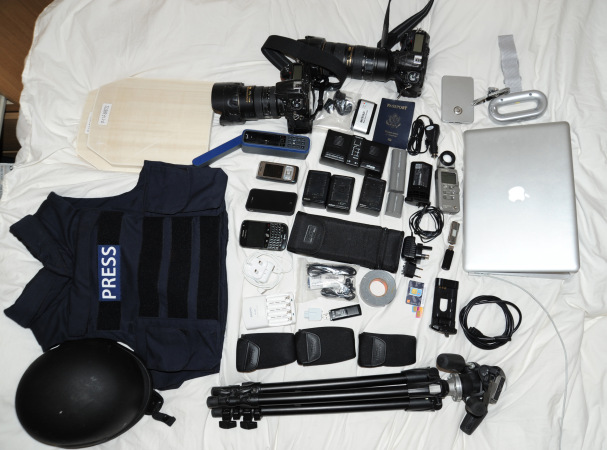
If there are pictures of you wearing helmets or body armour anywhere you should consider removing them. Blog posts, tweets and Facebook entries could prove that you knew what you were letting yourself in for as well. We are not advocating committing insurance fraud but you need to decide before submitting a claim what your position at the time was. If you are claiming with any of the major insurance brokers I would suggest that you get a crime number and hold back, if you can, until we get a definitive statement.