What's going on at DACS? Part 2

Sir John Tenniel

In this second part of his assessment of what is happening with DACS, Andrew Wiard explains why the current situation is not something that photographers should accept.

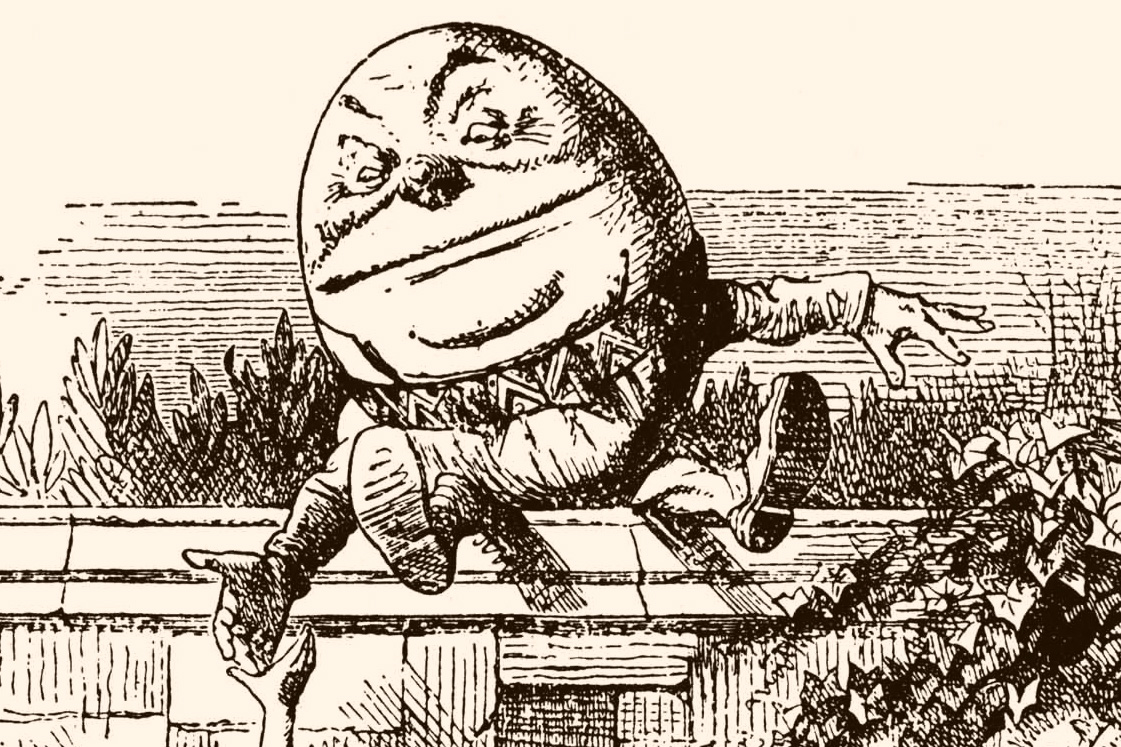
“When I use a word,” Humpty Dumpty said, in rather a scornful tone, “it means just what I choose it to mean—neither more nor less.”

Insisting on ALL secondary rights – does it really matter? Is it such a big deal?
Yes it is, but first, what exactly are these secondary rights everyone is talking about? Fact is you will not find a concise legal, or any precise, definition anywhere (or if you find one, please let me know). They can be defined negatively – they are those rights which are not primary. And primary rights are? For want of a better definition, the rights we exercise directly ourselves.This is how DACS describes, not defines, but describes secondary rights: those “ it would be impractical for you to license……. on an individual basis ”. At first sight all sounds plain common sense. Our primary rights  are those we exercise individually and directly (or through our agents) and as for photocopying, well, that’s best left to DACS. That’s secondary. 
But hang on, who decides what rights it is impractical for us to license, and how? What’s secondary and what’s not? Photocopying is pretty obvious, but where is the line drawn and can we trust those who draw it?
Take the strange case of the European “Memorandum of Understanding”.  I first wrote about this for the Stop43 website.  The point here (and I’m afraid you really do have to plough through all that to get it) is that the signatories to this European memorandum were plotting to consign our *primary* rights to collecting societies (you should also read DACS’s reply). The idea behind the MoU was  to republish out-of-print works, for the benefit of humankind of course, if the authors or publishers do not do so themselves. Their rights would have to be taken into account, but then what to do with embedded works, works embedded on the printed page?
Embedded Works? – photographs, to you and me. Ah, the solution is obvious – collecting societies!
Why? Why? If any publisher, any publisher, whoever they are, wishes to produce a new edition of a book containing a photograph which I have already licensed directly once, all I have to do is – do it again. Negotiate a further licence. Directly. Any photographer who supplies books for a living will do this as a matter of course. By any definition, we are not talking secondary rights here. These are primary rights. Our rights. Not secondary rights, the rights which according to DACS, are those it is “impractical for us to license on an individual basis”. But the rights we know perfectly well how to license directly ourselves. No doubt the publishers of out-of-print works will find dealing with us tiresome. All publishers find licensing any works tiresome. But however secondary rights are defined, they are most certainly NOT those rights which publishers find it oh so inconvenient to have to license on an individual basis! And we have no idea what other rights of ours will be considered secondary in future. This is why it is so important that any secondary rights agreement spells out precisely what rights are referred to, and any additional rights to be collectively administered thereafter are specified, negotiated and agreed in advance, and agreed without the threat of money being withheld.
A gang of European collecting societies agreed to this. And our UK rep there? – yes, you guessed it, DACS. Which is why, in their reply referred to above, they are so keen to make out that the memorandum doesn’t say what it means when it says what it says – or rather, as DACS puts it, it is all subject to consultation: “ a collective management organisation for visual works (such as DACS) would be obliged to consult with rightsholders prior to any agreement being reached “. DACS would consult. But that doesn’t explain what on earth they were doing going along with all this in the first place. Consult, over our *primary* rights? And, anyone remember being consulted?
DACS, consult? Really? The way they consulted about this new agreement of theirs? It went like this. First they got a small number of important figures into a room, told them all about the forces of darkness (true) but that none of this could be publicly revealed for fear of (legal?) consequences. Utterly false. It’s all coming out now, but nothing we couldn’t have been told right at the start. These figures were then to go out and tell all photographers, without going into  details, that they must sign up. Which, BAPLA  excepted, they then did. The one thing DACS did not do was consult their contributors. They represent us individually. They were after individual signatures. They should have talked to us, individually.
Instead, a series of inducements, “prizes”, to get people to sign up before the annual deadline. I was offered a prize draw, where I “could win up to £250 in vouchers to spend on art and photography materials” . And if I were to recommend Payback to a friend, “we’ll offer you both the chance to win £150 to spend at on art or photography materials at Jackson’s Art Supplies or Metro Imaging”. Talk about desperation!
Are we adults or kids to be tempted with sweeties?
No mention, of course, in these emails, of the new contributor agreement which had to be signed as the last stage of completing the claims form, or of its significance. Those discussions were only for the chosen few. If you doubt that, look at what happened to the NUJ’s NEC member for photographers Pete Jenkins, who dared to ask them what was really going on. DACS first offered him a meeting before the signature deadline. Then withdrew the offer, refused to meet him, saying they’d be holding a meeting for a wider group after the deadline. After the deal was done and it was all over! And, after the deal? Pete naturally asked to come along but was then told no, they were full up, and they had what they thought was a wide enough range of interested parties already.
Translation – no awkward squad, thank you.
Just before Christmas I received an email from DACS.

“ With the introduction of a new Payback membership, we are now able to formally consult with you on issues concerning your rights, and importantly, safeguard your existing and future royalties.”

What nonsense. They’ve been able to consult us, formally or not, for months. Before, not after, we had to sign. They just didn’t want to.
Let’s be clear what they did. They announced a new agreement. They said they would consult. But not, of course, the individual photographers required to sign. They then stuck to what they said in the first place. The DACS take it or leave it discussion, followed by their take it or leave it agreement.
And what if we did not sign? The payouts last Christmas were for sums collected before last year, that is before this new agreement which has only now come into force, collecting for future payouts in Christmas 2015. DACS was clearly saying, no signature, no payout. You couldn’t complete your claim for this year without it. In other words, they were applying this agreement retrospectively, to enforce compliance. Signing under duress – legal? – well, which one of us had the time, the energy, and most of all the money, to find out?
So, there you have it – consultation, DACS style.
This is serious. DACS say they will consult in future about collecting any other secondary rights. I think I now know what that means. We have given them the power not only to interpret that word as they see fit, but to collect whatever they think falls into that category, and regardless of what we think. They say we can always withdraw our signature at a future date, but so what? Because what we have signed up to now will now in all likelihood give them, under the new ECL regulations, the power to collect the “secondary” rights of all photographers, whether signed up or not. So you can unsign if you like, but you’re going nowhere as DACS will just carry on collecting.
What to do? The law is an expensive but no longer the only way to bring collecting societies to heel. Under the new ECL regulations they have to behave. So the CLA thinks it can collect for pictures but not pay photographers? Time to shop them to the Secretary of State. That’s one way.
There’s another. It will become increasingly practical for us to collect directly. Cue Paul Ellis of Stop 43: “ The solution is obvious – the Copyright Hub, which when implemented will suddenly make a load of ‘secondary’ rights ‘primary’, because it will no longer be impossible for individual photographers to manage them.” The future should indeed lie with the Copyright Hub, see here: https://www.copyrighthub.co.uk/ .
That however is still under development, that is for the future, and today we are already trapped by our signatures. And did we really have a choice?  For there’s no doubt whatsoever that the  vultures are circling. This from DACS earlier this month:

“ In DACS’ view, the CLA is trying to use its market power to reduce the existing 8% share of its revenues that go to visual artists and possibly risk the future of the Payback scheme. DACS has insisted that the existing arrangement should continue until the end of September 2017. This will help manage the transition to any new arrangements and protect our members’ incomes in the interim. To date the CLA has not accepted this.”

The latest is that DACS has now, using the authority we have given them, forced the CLA to accept this – temporary – deal. Only a temporary deal, but a deal none the less.
For this we have paid a heavy price. Let’s be clear. DACS may be on our side. But we have just given a hostage to fortune.

“The question is,” said Alice, “whether you can make words mean so many different things.”

“The question is,” said Humpty Dumpty, “which is to be master—that’s all.”
2014 UK Picture Editor Guild Awards winners announced

Joanne Davidson, The Picture Library Ltd

 
Congratulations to all of the winners at the 2014 Picture Editor Guild Awards. 

  • BT Sports Photographer of the Year: Simon Stacpoole, Offside
  • Getty Royal Photographer of the Year: Andrew Parsons, i-Images
  • News Photographer of the Year: Jeff Mitchell, Getty Images
  • Christie’s Arts & Entertainments Photographer of the Year: Joanne Davidson, The Picture Library Ltd
  • Bloomberg Business Photographer of the Year: Leon Neal, Agence France Presse
  • Fixation Young Photographer of the Year: Henry Nicholls, Newsteam/SWNS
  • Genesis Regional Photographer of the Year: Charles McQuillan, Getty Images
  • Photo Essay of the Year: Jeff Mitchell, Getty Images
  • Citizen Photographer of the Year: Vinesh Raipul


For the full list of winners go to The Picture Editor Guild website

Anyone for Polo

Eddie Mulholland

I was covering The opening of The Field of Remembrance (the crosses with poppies laid every year by The British Legion) at Westminster Abbey, which this year was by Prince Harry, when I first heard about his trip to Oman and Dubai.The Telegraph’s Royal correspondent Gordon Rayner was down to go and I explained how happy I’d be to accompany him. A few forms later and I was on the list to go. Not a big list but a very manageable one for the Palace press office. John Stillwell from the Press Association, Chris Jackson from Getty, Time Rooke for Rex Features and Darren Fletcher from The Sun.
Harry was arriving on Tuesday night and I got there Tuesday morning having flown through the night. The arrival was pooled , covered by Tim and Chris but Darren and I still turned up at the rather plush hotel just in case we were allowed to crash the pool. We weren’t so we retired to the bar for a beer then met up with the others to travel back by minibus to the hotel we were staying in. It was “National Day” in Oman and the traffic was horrendous. All the locals seemed to be out in there cars wearing masks and hooting and beeping their way around Muscat. We ended up having to walk the last few hundred yards to our hotel which gave us the chance to take a few frames of the festivities. Everyone seemed really friendly, they were having a great time, though a few had had their exhausts adjusted to make a sound that was very similar to gunfire, which did throw one particular reporter to the floor of the bus when we heard it for the first time.
.  .
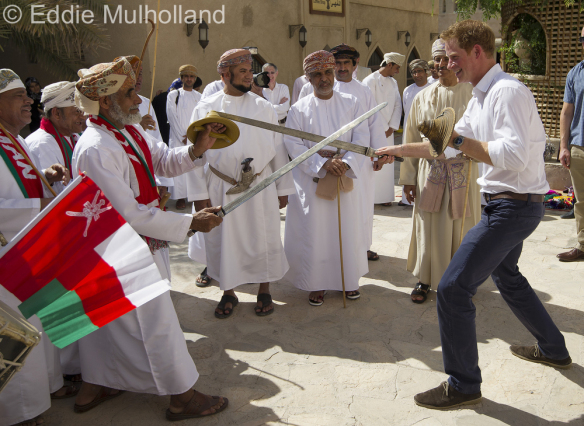
The following morning was a 6am start for the minibus journey to Nizwa Fort. Charles and Camilla visited earlier this year and took part in some local tribal dancing involving swords so obviously we were crossing fingers for a repeat royal performance.
We retired for several coffees whilst we awaited Harry’s arrival and took the opportunity to take some pictures of some of the children and some of the locals who were waiting to meet the Prince.
.  photo-29A
photo-32A  photo-33A
I did a combination of pictures on my iPhone 5S and my normal Nikon work cameras (D4S D3S and D3)
The picture of the man with the walking stick was then put through ‘Snapseed’ and ‘Instagram’…the version that looks warmer was not. I do like to use my iPhone for work pictures but I’d never have the guts to shoot an entire assignment on one….unless of course I was asked to.
A lot of photographers complain that filter Apps like ‘Snapseed’ and ‘Instagram’ make everyone capable of producing “great” photographs. I tend to disagree. If you haven’t got the right image there’s nothing an App can do for you. So far Apps can’t find a picture for you, yeah they can polish a turd but it’s still going to be a turd.
Apps are tools as is the camera on your iPhone. You still need to know how to use the tool to get the most out of it.
Anyway, Harry played ball. Not once but twice. He had a go on the sword then went for a tour , then had another go on the sword. Our local Omani embassy chap did a brilliant job of positioning the dancers in front of Harry twice. We all got what was required.
 
.  .
.  .
.  .
.
The next day was going to be a long one. Harry was visiting The Grand Mosque in Muscat first thing then we were flying to Dubai followed by a bus-ride to Ghantoot Polo ground, Abu Dhabi, for Harry’s ‘Sentebale’ charity match. We were told all sorts of celebrities would be attending..in the end it was only Geri Halliwell and her new fiance that anybody recognised.
.  .
.
photo-31A  .
.
.
.
We went home and Harry stayed to watch the Grand Prix…a few people cynically commented that that was in fact the reason for the visit.
Anyone for a pre-Christmas shopping trip to New York ?

Away day… to Poland

As if often the case in the era of multimedia news gathering I was recently despatched to Poland on a whirlwind visit to shoot stills and video. A British armoured Battlegroup have been taking part in war games with the Polish military entitled “Black Eagle” for several weeks and the press had been invited along to coincide with a visit by the Chief of the General Staff – General Nick Carter .
We had to be at the army base in Poland bright and early on Friday morning so our only choice was to fly late Thursday night to Berlin and then drive for the border – luckily only a two and a half hour drive. Our hotel for the night was literally a truck stop motel, with a bit of a Swiss chalet style thing going on, but being a 10 minute drive from our rendezvous point the following morning it was bearable .
Now, I have this thing as many of you probably do where I conjure up in my head a “ best case scenario” of what to expect on a job and then set myself up for disappointment . In this case I envisaged myself in a trench with a screaming corporal throwing smoke grenades as the tanks roared forward all shot on a 24mm …….
As if….. After being transported to the range with a host of other media from the likes of ITN, The Times (sans photographer) the BBC and a likeable but complete anorak from Combat and Survival mag we found ourselves on a Soviet era style viewing platform from where we were expected to shoot all our images. No chance of using a 24mm here !
The again they were going to be firing live rounds so probably was best to be have some distance between us. Luckily due to some advice from a former Telegraph colleague who now picture edits for the Army I had begrudgingly brought a 300 and an extender with me without which I would have been in deep trouble, but was still utterly under-lensed for the live fire part of the exercise .
3 (UK )Division on the largest joint military exercise since 2008 in Zagan Poland with the Polish 11 Armoured Cavalry Division.© Heathcliff O'Malley
Armoured vehicles including Leopard II tanks from the Polish 11 Armoured Cavalry Division 3 (UK )Division on the largest joint military exercise since 2008 in Zagan Poland with the Polish 11 Armoured Cavalry Division. ©Heathcliff O'Malley
Chief of the General Staff - General Sir Nicholas Carter . The 3 (UK )Division on the largest joint military exercise since 2008 in Zagan Poland with the Polish 11 Armoured Cavalry Division
I recently bought a Canon C100 video camera, which takes all my EF lenses, which has revolutionised video for me . I now no longer have to fanny about with a 5D taking bits on and off depending on whether I’m shooting stills or video with it’s built in ND filters and XLR inputs . I now have a dedicated video camera which can use all the lenses I have collected over the years . Mind you this doesn’t solve the issue of when to shoot stills and when to shoot video on an assignment where there are no second chances .
Once the demonstration started there was nothing I could do but go with the flow and let my instincts take over. My c100 was mounted on a tripod and as the Challenger II tanks burst out of the tree line I panned with them and when I felt I had enough moved to stills leaving the camera rolling . I continued in this fashion alternating between camera until the tanks were probably a 750m off in the distance shrouded by a cloud of smoke which only the muzzle flashes of their powerful guns could penetrate. At one point I even mounted the 300 2.8 on the c100 for a few long shots and the 1.5 crop factor really helped.
Afterwards we got to have a short walk about where I bumped into an old school friend I hadn’t seen in 30 yrs who is now a Brigadier and shot some short lens stuff of soldiers and officers that made a huge difference. Finally there was an interview with the general and piece to camera with the reporter Ben, whom I had worked with a lot over the years and has now gained the confidence needed to stand in front of a camera, a skill which is not to be underestimated.
After a quick edit, caption and send of the stills we jumped back into the hire car for the drive back to Berlin with only around five hours before our flight was due to depart forcing me to edit whilst Ben drove down the dual carriageway westwards. The stars we clearly in alignment that day as miraculously my 4g mifi worked flawlessly (never usually does when it really matters!) and was able to file the video before going through to departures and the luxury that awaited with our Easyjet flight back to Gatwick .
See the video here https://vimeo.com/113108829

The one on the left is a snapper…

Mikael Buck

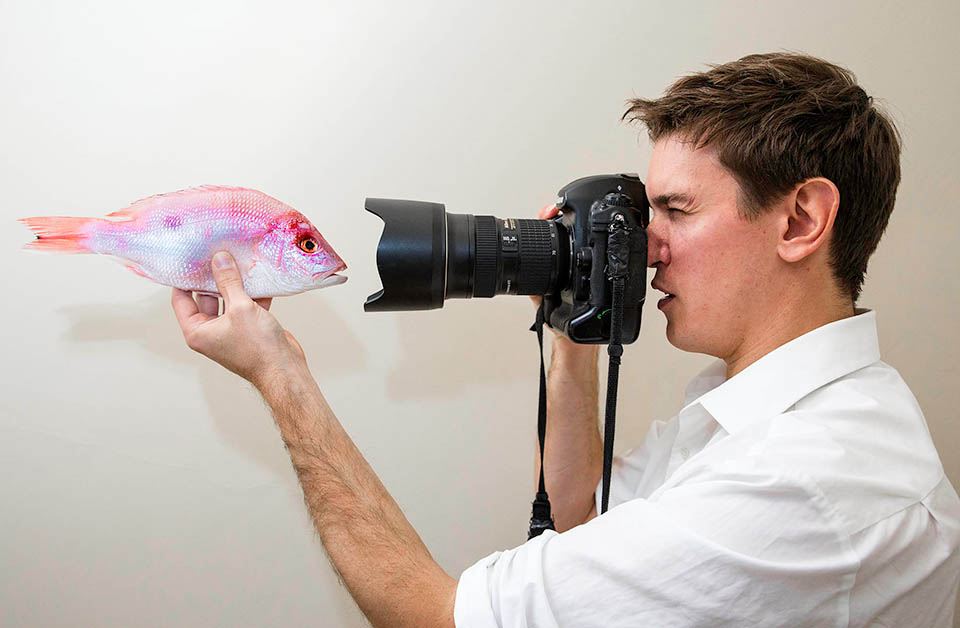
On the left we have a Snapper, it’s a type of fish, on the right we have a photographer – please learn the difference.
Would you like to demean everything I have achieved in my career with one word? Great! Then just call me a snapper – you won’t be the first or the last person to do it.
With few exceptions, the term snapper is used as a description for photographers by almost everyone we work with – from journalists, to PR professionals, picture editors and other press photographers. What began as a jokey phrase used amongst photographers has been taken from us and turned into a widely accepted description of what we do.
Often when I bring this subject up the reply I get back is something along the lines of “What’s your problem? It’s just a word. I think it’s quite fun”. Well, here’s my problem…the term implies that our sole contribution at work is to own a camera and turn up on time. In nobody’s dictionary is a snap considered to be something that took any skill or input to achieve – it is without a doubt a derogatory term when used to describe a photo.
Of course, most people using the do not really believe we are just taking ‘snaps’. I’ve heard the term used by many colleagues and clients who I know to have a great respect for, and understanding of, what we do. But the term has slowly seeped into our collective consciousness and rarely gets questioned. Whether the person using them intends it or not, some words are loaded with meaning.
One defence of the word I’ve often heard is: “Well OK, obviously some of you guys are photographers, like those who do reportage and high end portraiture – but you can’t exactly call waiting outside court or a night club and taking a few snaps of someone leaving photography”. Yes you can. If you think having five seconds (that’s not an exaggeration) to get a sharp picture of someone running towards you in the dark isn’t a skill then I suggest you try it for yourself. Afterwards you’ll need to talk to quite a few people to make sure that you’ve identified the right person in your photo. But it’s just a snap so maybe don’t worry about that part too much, eh?
Some of my colleagues will no doubt think that I am getting carried away over an insignificant and almost endearing term. And they might compare me to a cabbie who would like to be know as an Executive Transportation Route Consultant (sorry cabbies – if that’s what you want, then that’s fine by me!). Indeed, the online forum where the majority of Britain’s working press photographers discuss their profession is called Snapperweb, so obviously not everyone feels the same way as me.
But I believe if press photography as a profession is going survive the transition to online then we need to learn to acknowledge and communicate to others the contribution we make to journalism – and the language we use is a powerful symbol to the wider world as to how we view ourselves.
Despite what some people will have you believe, press photography is alive and well – most of the space in our national newspapers and news website is given over to photographs and most of these photographs are taken by professional news photographers and not amateurs. This tells you all you need to know about the power of the still image and the skill of the people taking these pictures. Yet shift rates have remained the same for over a decade, the public view our profession with complete disdain and staff positions are almost unheard of. That tells me that as a profession we do not have the power or influence that is commensurate with the contribution we make – stopping using the term “snapper” to refer to ourselves is a small, easy step we can take towards rectify that situation.
So then, just to sum up – a snapper is a type of fish and not a press photographer. Spread the word!
I’d love to hear your thoughts, whatever side you take in this debate. Leave a comment below or tweet me and the association – @mikaelbuck and @TheBPPA
The views expressed here are solely my own and do not necessarily represent the views of The BPPA.
You can see Mikael’s gallery page here.

New from the UKPCA – Passport and Chips

All change at the UKPCA – the UK Press Card Authority, where the BPPA is one of the card issuing gatekeepers. At today’s meeting they voted nemo contra for two fundamental reforms.
The meeting faced two problems. First, Custom Card, who administer the card on behalf of the gatekeepers, had detected two duplicate applications for the card from one individual through two different gatekeepers using subtly different details! The database relies on these details and the fraudulent application was only spotted because both applications came in on the same day with the same photograph. Fraudulent information undermines the integrity and security of the entire system. Clearly the case for independent verification of personal information is overwhelming.
Secondly the UKPCA had been approached by Downing Street police, asking  in the nicest possible way what we could do about security generally, and saying they got on well with the regular photographers, but they’d had complaints from them about people getting in with Demotix cards,  some of whom did not appear to be even taking any pictures!
Demotix cards – the ones that look surprisingly, alarmingly, you might even suspect deliberately, just like ours.
Custom Cards wanted to activate the card chips, which all UKPCA cards now carry, in full – all data, not just pin numbers (the phone line verification for which is not 24 hours). And they now have an app which would allow police to check card holders instantly and speedily. That would take care of any confusion over those Demotix cards looking so  much like ours, because they just don’t have one. And avoid what one photographer recently went through in Downing Street – 45 minutes while police checked him out.
So why on earth hasn’t this been done before? The chips are all there, all ready, we all pay for them….answer, because the NPA and NS simply refused to cooperate. That’s now history. The vote’s been taken. All gatekeepers must now accept fully working chips as a condition of remaining gatekeepers. Custom Card will now switch them on, and distribute the app.
Back to personal information – the other major change. From today, for verification purposes, all applications for the press card must be supported with the number, and a scan, of either passport or driving licence. Speaking for myself, I cannot imagine why anyone thinks this such a big deal – every year I submit both my passport and driving licence numbers three times, to get into the major party conferences. And have always thought it absurd that I have to meet a higher standard of security vetting to get into those than I do to stand all day outside No.10.
These two long overdue, vital changes will improve both the security and the authority of the – our – press card. And make card checks easier , faster, and painless for all concerned. Job done.
 

Who has what's required ?

 
Here’s what the late, great Sir David English, who created the modern Daily Mail, had to say about newspaper photographers. (thanks to Dave Parker)
” Press photographers are a strange breed. Moody, enthusiastic, temperamental, excitable, humorous, self-deprecating . They are in many ways the most interesting collection of people to be found on any national newspaper. More interesting frequently than the star bylined writers. More interesting than the gossip columnists with their fund of inside chatter. More interesting even than the showbiz kings with their stories of rubbing shoulders with the great and their `all life´s a cocktail party´ philosophy. Photographers are the shock troops of journalism. They cannot muse. They cannot pontificate. They cannot sit in the office and get their stories by telephone. Nor do they pick up their scoops over lunch. They have to be where the action is. They have to be there! ”
And here’s what Roy Greenslade Professor (no less) of journalism had to say about newspaper photographers.
“Everyone can, and does, take photographs as a matter of rote nowadays.No event occurs – fires, fetes, road accidents, cats up trees, whatever – without someone being on hand to snap a picture. In the real sense of the word, newspaper photographers are therefore redundant.
I concede that standing outside court for ages to capture an image of a defendant or witness may still require a professional (enter the experienced freelance). Otherwise, for the general run of the news diary, anyone can do it.”
I think we all know who has/had the better understanding of the qualities required to do the job .
The idea that because almost everyone has a camera and takes pictures means you no longer need photographers has a logical conclusion. Almost everyone can write and has a pen.
Newspapers are always on the look out to cut costs… to make a few more quid for the shareholders. I mean you wouldn’t expect them to have last year’s reg car would you. But no business will ever profit by making cuts. That’s short-termism. You have to speculate and invest to accumulate. That’s not just my opinion. Ask billionaire Warren Buffet. Stupid managements make stupid cuts which affect their product the newspaper. The product suffers and the advertisers leave in droves driving profit further down. Stupid management then implement more cuts to increase the dividend which affects the product and the advertisers leave in droves driving profit down further. It’s a cycle of stupidity.
The demand for visuals is higher than it has ever been. More photographs and videos are used than ever before. Newspaper websites need photographs, 360’s, time-lapses, videos, slideshows….these are the things that attract an audience and advertisers.
So who are the best people to deliver these things. Easy answer really. It’s not the columnists.
It’s us. The photographers.

Commentating on the race to the bottom

 
Yet again The BPPA finds itself responding to a piece by Professor Roy Greenslade on The Guardian’s website. Yet again Professor Greenslade adds his influential voice to the drastically mistaken notion that anyone can take a picture good enough for a newspaper these days. Seriously? Have you looked at some of the utter rubbish that gets used in some of our newspapers? To assert that anyone with a camera can take a picture isn’t only an insult to the skilled photographers who make silk purses out of sows ears on a daily basis it also invites the bean-counters who are behind the decisions to axe photographers jobs to question the need for written journalists too.
I can just imagine the conversation between the accountants and the owners with an editor sitting there listening to the conversation;

Owner: We need to save some more money. Sales are still in decline and sacking the photographers hasn’t saved us enough.

Accountant: Well, members of the public are providing all of our visual content so maybe we can get them to supply the words too.

Editor: But…

Owner: Brilliant idea. Let’s start with all of the senior reporters who really know what they are doing. Editor – we need you to sell this to the staff.

Editor: But…

Owner: They’re all scared for their jobs anyway. Accountant – you are a genius and you will be rewarded for your work with a big pay rise.

Editor: But…

Accountant: Thanks Owner, maybe we should discuss a few other money-saving ideas that I have over a drink or two. Do we NEED editors?

How long will it be before expensive columnists get their marching orders in favour of a few blokes with word processing software who “can write a bit”? Who will those people actually be? Will they be honest and concerned citizens or will they be people with an agenda and an axe to grind?
We are already at the stage where a large percentage of the ‘supplied’ images being printed in some papers are not properly checked for honesty, accuracy or ownership (not to mention quality). Beyond that, nobody seems to care whether members of the public are putting their own or other people’s lives in danger to get the pictures that they are giving away for free. Even Professor Greenslade has to agree that journalism stands or falls on its honesty and accuracy even if he has already thrown the towel in on quality.
One of the numerous responses to his Media Guardian article points out that very few people remember the words after the event compared to the number who remember the images. You might think that newspaper owners would forget this at their peril – unfortunately they have forgotten and their newspapers are in peril. Another response points out that newspaper decline could well be a chicken and egg discussion. Which did come first – the fall in sales or the loss of photographers?
This is rapidly becoming a race to the bottom and it really doesn’t help the case for quality newspapers and quality journalism when one of the highest profile commentators on the industry has given up on any notion of defending the simple idea that quality products have longevity and cheap ones don’t. We’d wonder if The Guardian’s own Picture Desk team would agree with The Professor’s odd logic or if its own sub-editors would approve of his fact checking.
Losing reporters would be the largest and most recent nail in the coffin of local and regional journalism. National newspapers, radio and television get a lot of their best people from the superb training ground that is (or maybe was) local journalism.
If I were contemplating training as a journalist right now I think that I’d have second thoughts about it. If the learned Professor is right maybe those currently on his course should consider switching to accountancy before it’s too late.

The Copyright Fight

As the song goes ‘There may be trouble ahead’…except this time there is no ‘maybe’ about it. For those that recall the less-than-wonderful “Clause 43” of Labour’s “Digital Economy Bill” which proposed to legalise the use of Orphan Works and Extended Collective Licensing – well, despite its defeat it’s back and this time it’s personal.
Hidden away in a completely unrelated Bill – namely the ERRB (the Enterprise and Regulatory Reform Bill) – are pretty much the same clauses that got thrown out before. The IPO (Intellectual Property Office) – a bunch of Patent-based Civil Servants in the fashion of Sir Humphrey from “Yes Minister” – were so miffed at their attempt to undermine photographer’s copyright being defeated that they’ve snuck their insidious plans back into Parliament hidden in a bill that has absolutely nothing to do with copyright.
There are many reasons why every photographer should be up in arms about this and we’ll list them below summarized by people who know far more about this than myself. The really, really important thing is that we still have the opportunity to send Sir Humphrey back to his Gentleman’s club in Pall Mall with a flea in his ear. They think it’s all over but it bloody well isn’t.
We still have time to effect change to the bill and even get the clauses thrown out (they shouldn’t be there anyway) but we have to act fast. We have to lobby the Lords and then we need to start a firestorm on our MP’s.
Interestingly we have some strange bedfellows as allies on this one including The Associated Press, Getty Images, Reuters, British Pathe, The Press Association, and the Federation of Commercial and Audiovisual Libraries, who have formed the International Media & Archive Consortium. They are threatening a judicial review should the bill become law, but it would be in everyone’s interest if it didn’t get that far.
This affects everyone who works in this country with a camera in their hands.
You all have to take the time to read what it means for you. Even if you just read the summary we’ve provided you’ll garner enough information to include in a letter to your MP or one of the Lords listed.
But it really is in our/your hands to do something for the good of all photographers working in the United Kingdom whether they know it or not.
Eddie Mulholland.
The proposals hidden in the Enterprise and Regulatory Reform Bill would do very serious damage to the livelihoods of UK photographers if adopted. We believe that the clauses should be removed rather than amended because:

    1. They should be subject to full parliamentary debate, not buried in someone else’s bill and secondary legislation.
    2. They rob photographers of their rights.
    3. They would not create economic growth, they would damage it.
    4. They break international law.
    5. They would be subject to judicial review even as they are passing through the Commons.
    6. They allow no room for the new “Copyright Hub” concept which, given time to get working, would deal with most of the problems.
    7. They are no substitute for a dedicated and properly considered Copyright Bill – this is nothing more than a rights-damaging fudge proposed by the Intellectual Property Office.

At some point the IPO should learn to realize that the intellectual property that they are supposed to look after is not only that of big business, inventors but that of hundreds of thousands of small businesses and sole traders whose combined worth to the UK’s economy is substantial.
See a fuller explanation on The BPPA’s website
Follow Stop 43 the campaigning group who did most to stop the orphan works clauses in the Digital Economy Act

The Seating Plan

On Tuesday of this week I was at The Leveson Inquiry. Not outside behind the barriers. Inside the building inside the courtroom, suited and booted and even wearing a tie. More astonishingly, so was The BPPA Chairman Jeff Moore (although he refused to shave). The most important BPPA person was Neil Turner, fellow Vice-Chairman and the man in the spotlight. The man who was going into battle with some of the finest minds in the British legal system.
Neil had prepared the initial eighteen page submission, so we knew that inside out, but as we spent most of the day before preparing we had no idea what route the questioning might take. Would they demand to know what our definition of ‘private and public’ was? Would they hold up photographs of photographers in bun-fights and demand their names? Would they demand the names of dodgy picture desks and editors?
The night before we had dinner together, whilst going over and over what might happen. Afterwards, Jeff said that it felt like The Last Supper. To put it bluntly we were bordering on terrified, well I was and Jeff admitted to being even worse. There was some mention of his ‘flapping posterior’…..
On Tuesday morning, we met beforehand and had a last minute chat and a hearty condemned man’s last meal. I went for the bacon sandwich. We headed off to Court 73 of the Royal Courts of Justice (RCJ) in London, where we were met by a ‘baying pen full of paparazzi’. Oh no hang on a minute, that’s what a television journalist would say. What really happened, was that some of our colleagues greeted us with a wave and got us to pose for photographs. One of the pictures even made it onto the Metro website! It was a little strange being on the ‘wrong’ side of the press pen, but it didn’t last long.
Incidently, the press pen itself was another of our little victories. The pen had been organised at the eleventh hour prior to the start of The Leveson Inquiry proceedings, by myself with Getty Images photographer Pete Macdiarmid and the help of High Court regular Nick Razzell. The Leveson Inquiry kicked off on Monday 21st November 2011 with Hugh Grant and the parents of Milly Dowler. There was no press pen organised in the High Court precinct for photographers. It was going to be chaos. Imagine the footage our television colleagues would have lapped up of the witnesses fighting their way through the throng of fifty or more photographers and cameramen! It would have been very very ugly and luckily a friendly head of security agreed with us enough that an organised pen would indeed be a much better idea. If you don’t ask you don’t get. Disaster averted on the evening of Friday 18th November 2011.
That first week we (press photographers….) were torn to shreds by witness after witness and television loved it. We were getting a kicking and we decided we had to fight back. That’s when we decided it was time that The Leveson Inquiry listened to our side of the story. Things were going to change for us whether we liked it or not, so we had to be listened to. We had to have a seat at the table when the changes were going to be made in the future.
Fast forward a couple of months later and there we were being shown around the Court. We were told we were third up to give evidence, so sat in from the start. It was running over and it was hot, so we were having difficulty staying awake, but it did give us the chance to acclimatise. We never made it on in the morning session, but we were told we’d be first on the stand for the afternoon session. It was starting to get tense again. When we went in, the Court rose and Neil went to the stand to take the Oath. This was it.
Neil was questioned on our submission by Carine Patry Hoskins, Counsel to The Leveson Inquiry. Contrary to what we expected, she explained before we went in what she would be asking us about and pretty much stuck to the script.
It was tremendously difficult to stop myself from sticking my hand up and chipping in. I wonder what my fate would’ve been had I done so….maybe a night in the cells!? We followed every word, muttering between ourselves about answers and generally cheering Neil on under our breath. I sat through most of it with my head down, concentrating. It was going well, but at any moment the Counsel could turn on us.
There were a few points that were at the forefront of my mind. Points that could cause us trouble. I was worried we’d be accused of having members that were involved in some of the worst examples that some of the previous witnesses had mentioned. My thought was, why would we have asked to come here if we thought our members were involved? I was worried they’d ask us what we thought of Paul Dacre the Daily Mail’s Editor-In-Chief’s ideas about changing the Press Card system. We hadn’t had the chance to really tackle this because we’d been in ‘prep’ meetings the day before when he was actually giving evidence. We are totally behind the United Kingdom Press Card Authority, but we had to make sure we didn’t alienate a man who has a lot of clout in our industry. We had to make sure we didn’t appear to think his ideas were rubbish, even if we did. The UKPCA already does most of what he was asking a Press Card authority to do. We had to make sure we were not led down the road of slagging him off. We were there to make friends and get a seat at the table, not make enemies. I was worried how they would react to our criticism about television getting access to events like The Leveson Inquiry whilst press photographers are left literally out in the cold. This was raised, but I think they felt it was a fair point. They certainly failed to pursue the negative side of the suggestion.
My greatest fear was the comment in our submission about “people involved in news stories, not having the sense to stop and talk for two minutes”. To be honest, I’d forgotten about this comment until it came up. I thought that it really made us sound like we think people should do what we want, or face the consequences. Neil played a blinder. He said, it was all about changing the public’s attitude to it. Brilliant and true. Why shouldn’t someone stop and talk, why should they run away!? All we want is a photograph, not to hijack their soul.
Lord Leveson thanked us at the beginning of the session for attending The Leveson Inquiry to give evidence and at the end of the session he commented, (paraphrasing….) “the problem is not with professional photographers and journalists, but professional photographers and journalists are needed for the solution”.
After all our hard work lobbying to attend, we’d finally had our seat at the top table.